“Congress shall make no law respecting an establishment of religion, or prohibiting the free exercise thereof; or abridging the freedom of speech, or of the press; or the right of the people peaceably to assemble, and to petition the Government for a redress of grievances.”
Have your students read the First Amendment aloud in class, translate it into emojis, and reflect on our civil liberties!
Are you still recovering from the rager that was Constitution Day?
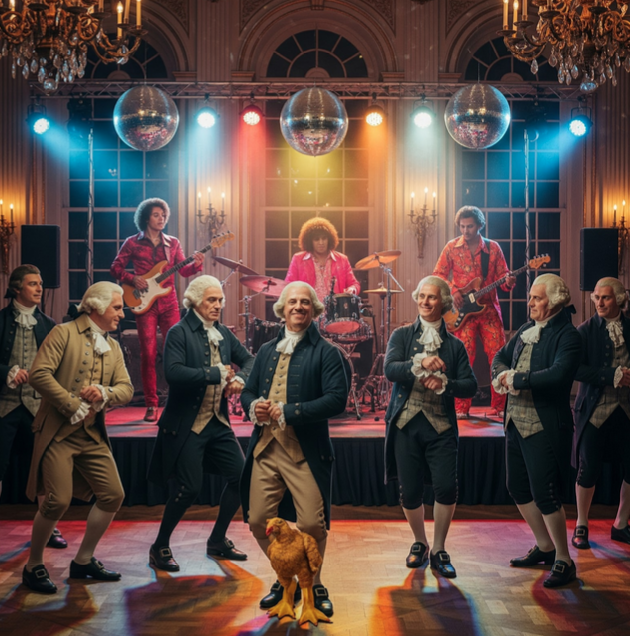
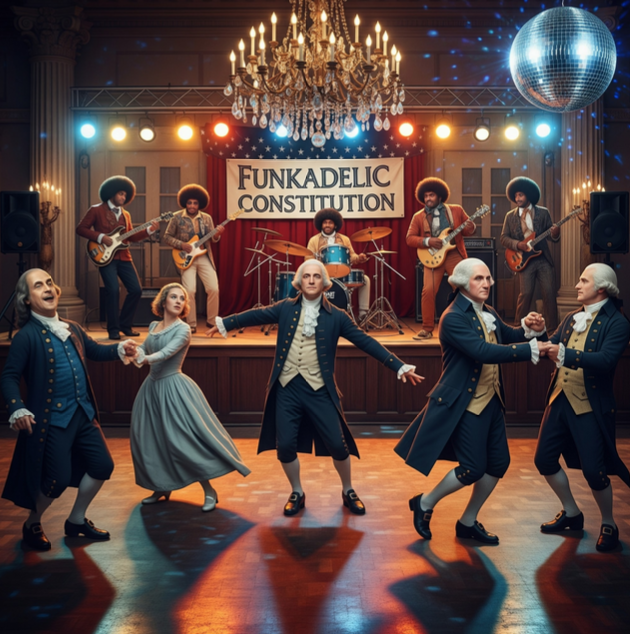
At my Constitution Party we turned up Earth Wind and Fire real loud:
Do you remember
The 17th night of September?
Madison was fightin’ states rights defenders
While chasin' articles of confederation away
Our liberty bells were ringin'
In the key that our framers were singin'
As we ratified in the night, remember
How the Federalists stole the night away, oh, yeah
Hey, hey, hey
Ba-dee-ya, say, do you remember?
Ba-dee-ya, constitution in September
Ba-dee-ya, never was a tyrannical day
Ba-du-da, ba-du-da, ba-du-da, ba-du
Ba-du-da, ba-du, ba-du-da, ba-du
Ba-du-da, ba-du, ba-du-da
One of things I celebrated on Constitutional Day was the First Amendment. I once thought that most everybody agreed that Free Speech was a good thing, but these past couple of days have left me speechless. Again here is the First Amendment in full:
“Congress shall make no law respecting an establishment of religion, or prohibiting the free exercise thereof; or abridging the freedom of speech, or of the press; or the right of the people peaceably to assemble, and to petition the Government for a redress of grievances.”
While the constitutional guarantee of civil liberties is absolute, there are limits on our actual freedoms. As the Supreme Court ruled in Schenck v. U.S. (1919) “You cannot shout fire! in a crowded movie theater.” Or to translate that to your students, “You cannot yell Labubu! in a crowded high school cafeteria.” We still have freedom of speech, of course, but our freedoms vary over time, and I feel like it’s recently been turned to airplane mode.
Help your students understand the constitutional underpinnings of speech freedom with this Free freedom of speech lesson that you would already have if you had remembered to purchase our fabulous AP Curriculum toolkit.
FREE Freedom of Speech Lesson
One day lesson about freedom of speech with case studies, First Amendment backgrounder, and information on required Supreme Court speech cases.
And while you’re at it, today’s class starter is about American press freedom. You might be surprised by how the level of American press freedom - which shall not be abridged - compares to other countries.
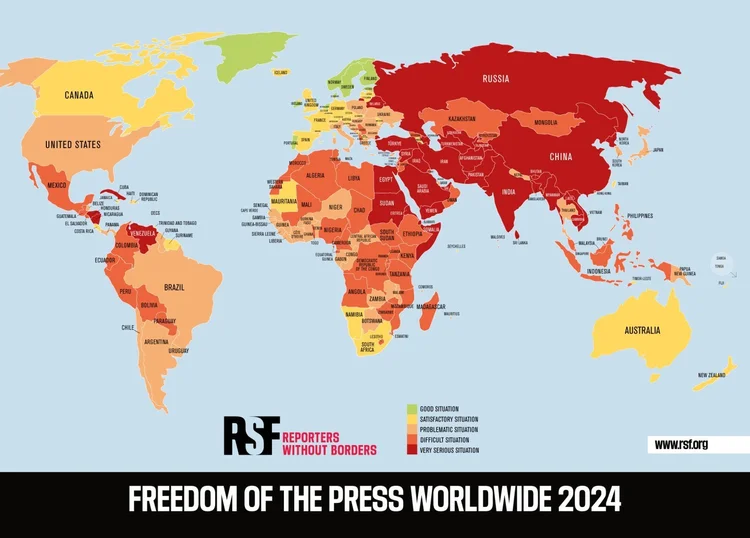
How free is the American Press?
Critical Analysis
Find answers to the following questions using the visual above, any links below, your big brain, and your knowledge of American government and politics:
According to the categories
Speaking of speech. One week ago - although it feels like much longer - Jimmy Kimmel delivered a monologue on ABC that upset some of his audience, including Brendan Carr, the head of the Federal Communications Commission. Chairman Carr’s power lies with the licenses that the F.C.C. doles out to radio and TV stations to broadcast over public airwaves, and he has argued that he can withhold licenses that aren’t being used in the public’s interest. In a podcast interview last Wednesday, Mr. Carr described Jimmy Kimmel’s remarks as part of a “concerted effort to lie to the American people” and said the F.C.C. was “going to have remedies that we can look at.” Mr. Carr went on to tell the podcast host, “These companies can find ways to change conduct and take action, frankly, on Kimmel, or there’s going to be additional work for the F.C.C. ahead.” That day, Disney/ABC pulled the plug on Kimmel’s show. The next day, President Donald Trump told reporters aboard Air Force One, that “97%” of some network coverage was negative toward him. “They give me only bad publicity or press,” Trump said. “They’re getting a license, I think maybe their license should be taken away.
While the First Amendment protects freedom of speech from being taken away by the government, it doesn’t protect speech from being taken away from corporations like Disney/ABC or Tractor Supply. After all, the First Amendment says, “Congress shall make no law” not “Disney shall make no law abridging freedom of speech.” Or even “Disney shall make no horrid movie like Pinocchio (2022): “a soulless disappointment with bad CGI and a poor performance from its lead actors, failing to capture the magic of the original.”
But that’s not the end of the story, over the years, the Supreme Court has spoken freely about freedom of speech. In the 1963 case Bantam Books v. Sullivan - the Constitution’s protection of free expression also prohibits the government from leveraging its power over private parties - such as ABC - to censor speech. And just last year, the Supreme Court reaffirmed that decision in National Rifle Association of America v. Vullo (2024).
Who knows what will happen next. For now, gather round the Earth Wind and Fire, crank up the First Amendment, and celebrate American history!
Happy Constitution Day Every Day!
WATCH IT AGAIN: If We Treated Teachers Like Pro Athletes!
📬 The Caucus is the weekly email from Social Studies Lab for AP Government and Civics teachers. Read past issues.