Mastering teaching often comes down to finding that sweet spot between student engagement and academic rigor. Think of a successful classroom as a finely tuned machine—one with two main dials: one to dial up engagement, and the other to dial up skill mastery and content knowledge. We’re turning both dials up to full volume this week! Take a walk with me through our newly overhauled glossary--it’s one louder!
We’ve completely rebuilt the Social Studies Lab GoPo Glossary, giving all 212 AP Government terms a consistent, streamlined format. Each entry now features:
Clear Definitions & Real-World Examples: Every concept opens with a precise definition paired with a concrete scenario, along with an embedded short NPR clip illustrating the concept in action.
Targeted Question Sets: Students tackle ten prompts per term—seven built around core AP task verbs (identify, describe, explain, compare) to sharpen exam skills, plus three creative prompts asking for personal opinions, representative emojis, and plain-English translations.
Interactive & Visual Learning: Students are prompted to sketch each concept to reinforce retention. Plus, check out the new Hexagonal Thinking Challenge—with a single click, students receive five random GoPo terms to arrange on a board, explain their connections, and receive automated reasoning scores. Results can easily be copied or printed for simple submission, making it ideal for warm-ups, review stations, or exit tickets.
Complete Answer Keys: Members gain full access to comprehensive answer keys complete with detailed explanations for every question.
GOPO GLOSSARY OF OVER 200 TERMS

I bet you know a lot of words.
Active (Working) Vocabulary: Words a person regularly uses in speech and writing generally range from 10,000 to 35,000 words.
Passive Vocabulary: Words a person can recognize and understand when reading or listening usually range from 30,000 to 70,000 words (with many adults recognizing around 42,000 base words or lemmas).
Daily Use: Most people get through everyday conversation and tasks using a core set of only 1,000 to 2,000 frequent words. In fact, the first 1,000 most common words make up about 89% of everyday writing.
Teacher Use: Teachers use about 36,000 every school year.Teachers speak at an average rate of about 174 words per minute (faster than secondary students at 140 wpm). Teachers do approximately 89% of the talking in a typical classroom, while students account for only 11%.Teachers ask an average of 142 questions per day, though over 90% of them require short answers of three words or less.Teachers typically answer between 300 and 500 questions per day, and make over 1500 decisions a day. No wonder I’m exhausted. I eat the same lunch every day just to take the number of decisions I have to make down by one.
Our online AP GoPo vocabulary glossary is easily the most popular resource on the site, and it’s constantly evolving. While it already features more than 200 essential terms, there are plenty of favorite political words I regularly bring up in class that didn't make the official cut and likely won't show up on the AP exam.
Take a look at a few of these political terms below. If you think any of them—or other favorite terms I missed—belong in our online glossary, let me know!
Let’s Bork
In politics, we love transforming proper names into active verbs. Consider what happened when the Senate rejected Robert Bork's Supreme Court nomination: today, getting "Borked" means having your official nomination or appointment defeated. Let’s start with some terms that come from names. In the world of politics we like to turn names and nouns into verbs. The Senate failed to approve the nomination to the Supreme Court of Robert Bork, and now to be Borked means to not have your nomination approved.
Gerrymander you!
Elbridge Gerry drew his district so he couldn’t lose and it was named a Gerrymander - the portmanteau of his name and the salamander shaped district he drew. Now we use gerrymander as a verb, to draw district lines so we know the winner before the election. A “gerrymander” happens when redistricting a voting area favors a political party. Its origins came from Massachusetts Gov. Elbridge Gerry, who was a framer—but not a signer—of the Constitution. He also argued against electing congress members to the House of Representatives directly.
When Jeffersonian Republicans presented him with a redrawn map for a Massachusetts district in 1812, which encompassed more of their supporters, he signed the bill supposedly with reluctance. During a dinner party held by opposing party members, illustrator Elkanah Tisdale added monster features to the district map. At the same time, poet Richard Alsop jokingly named his creation a “Gerry-mander.” Today, the practice continues to produce amorphous districts—such as Pennsylvania’s former Seventh Congressional District, nicknamed “Goofy Kicking Donald Duck.”

Goofy Kicking Donald Duck Congressional District

Midterm Election Prediction Contest 🎱
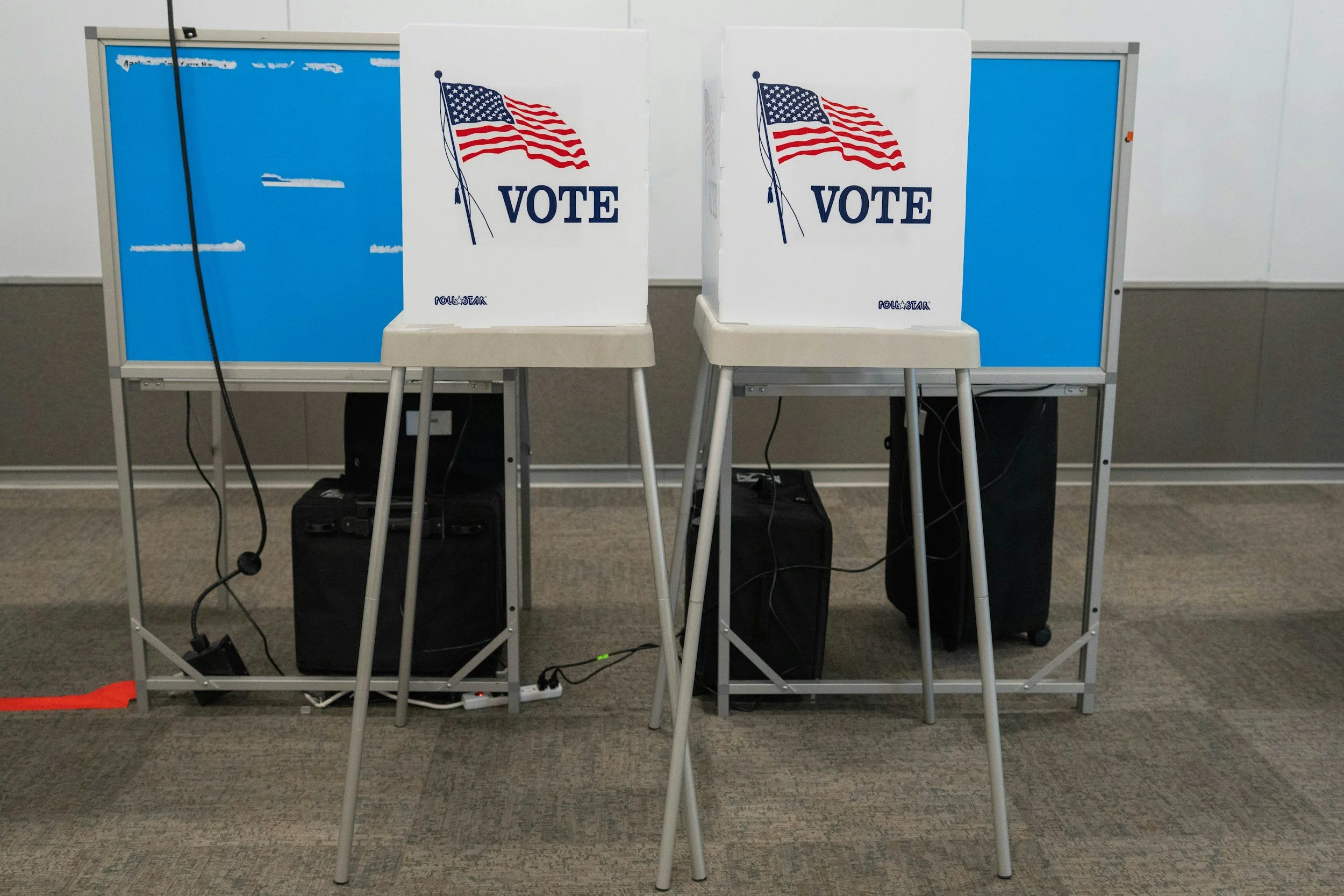
America voted and a student won! Congratulations to our winner of the 2026 Midterm Election Prediction Contest! Out of nearly 150 entries from schools all over the country, the winning prediction came out on top. For his accurate prognostication the winner received a $50 Amazon gift card for himself and for his amazing GoPo teacher, their teacher ! 🎉 🎉 Thanks to all the students and teachers who participated!
Get all the activities and lessons — 2026-2027 AP Government Curriculum All Five Units Year-long and Semester Pacing
Our 2026-2027 AP Government Curriculum Includes:
Aligned with New 2026 AP CED (course and exam description) skills and content 🟰
Updated to include the 4 new Foundational Documents with inquiry learning resources, graphic organizers, and keys for all 13 Foundational Documents including Federalist No. 39, The Emancipation Proclamation, The Gettysburg Address, and Core Principles from Adam Smith’s The Wealth of Nations📃
Instant Download of AP Government and Politics YEAR-LONG and SEMESTER-LONG curriculum in Google Docs 📄
Great interactive online games, activities and reviews 🕹️
Pacing guide for yearlong and semester course 📅
Fantastic lessons full of great activities for every single day of the year 🏆
Reformatted Current Events connecting Trump Presidency to curriculum ⚡
Loads of brand new Google Slides in every unit 🔆
Special Constitution Inquiry - The Five Pillars Limiting Tyranny 👑
Answer Keys for assignments, activities, and assessments 🔑
Rigorous activities to develop the knowledge and skills for success on the U.S. Government AP Exam 🏁
Big question to connect learning across all units 💥
Skill-building practice throughout all 5 units 🏅
Learning thread to connect content across all five units🧵
Streamlined CONVO discussion format for each unit 💬
Updated fact sheets and backgrounders for big topics ℹ️
Inquiry-based resources, graphic organizers and keys for all 14 Landmark Supreme Court Cases like US v Lopez and Tinker v Des Moines ⚖️
Great graphic organizers 🗄️
Rigorous and creative unit projects (assignments, rubrics, assessments, and step-by-step guides) to prepare kids for the required AP Government project 👷
Fully compatible with every College Board approved textbook 📖
Test-prep tools for success on the AP Government and Politics exam including:
Step-by-step writing workshops on each of the four required FRQs, including the updated argument essay ✍️
Exam Pro Tips to help students master the skills needed to attack the multiple choice test section 👉
A complete AP test bank with downloadable and online versions of 2 full-length exams (55 multiple choice questions, answer key, 4 FRQs and rubrics, each) and all 5 unit tests with multiple choice question and an FRQ for each unit 💻
Review Sheets for each unit test, including practice questions, vocabulary lists, and teacher keys for all court case and foundational document rubrics ⏰

Happy Hanksgiving!