Critical Analysis
Find answers to the following questions using the visual above, any links below, your big brain, and your knowledge of American government and politics:
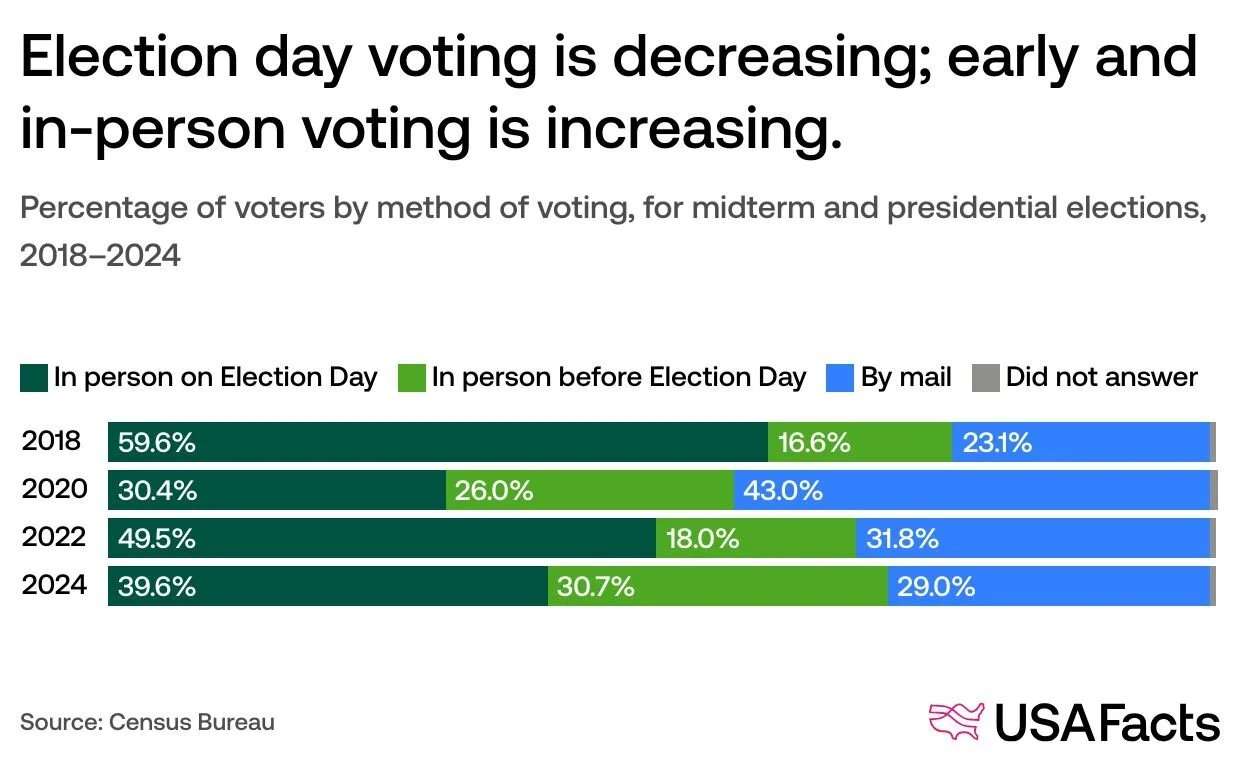
The U.S. has a long history of mail voting. Large-scale use of mail ballots originated during the U.S. Civil War, when some soldiers were allowed to vote remotely after absentee voting laws were passed in their home states. Today, mail voting is widely used around the world, with more than 30 countries—including Switzerland, Germany, and South Korea—allowing voters to cast ballots by mail. Mail ballots are widespread across the United States. For example, in 2024 alone, the U.S. Postal Service processed over 99.2 million mail ballots. What percent of votes in the 2018 midterm election were cast by mail?
Earlier this month, the Supreme Court blocked an executive order from President Donald Trump restricting voting by mail in ways that could have thrown the upcoming midterms into chaos. What percent of votes in the 2024 were cast by mail?
Based on the data in the chart above, describe one trend in voting by mail (VBM).
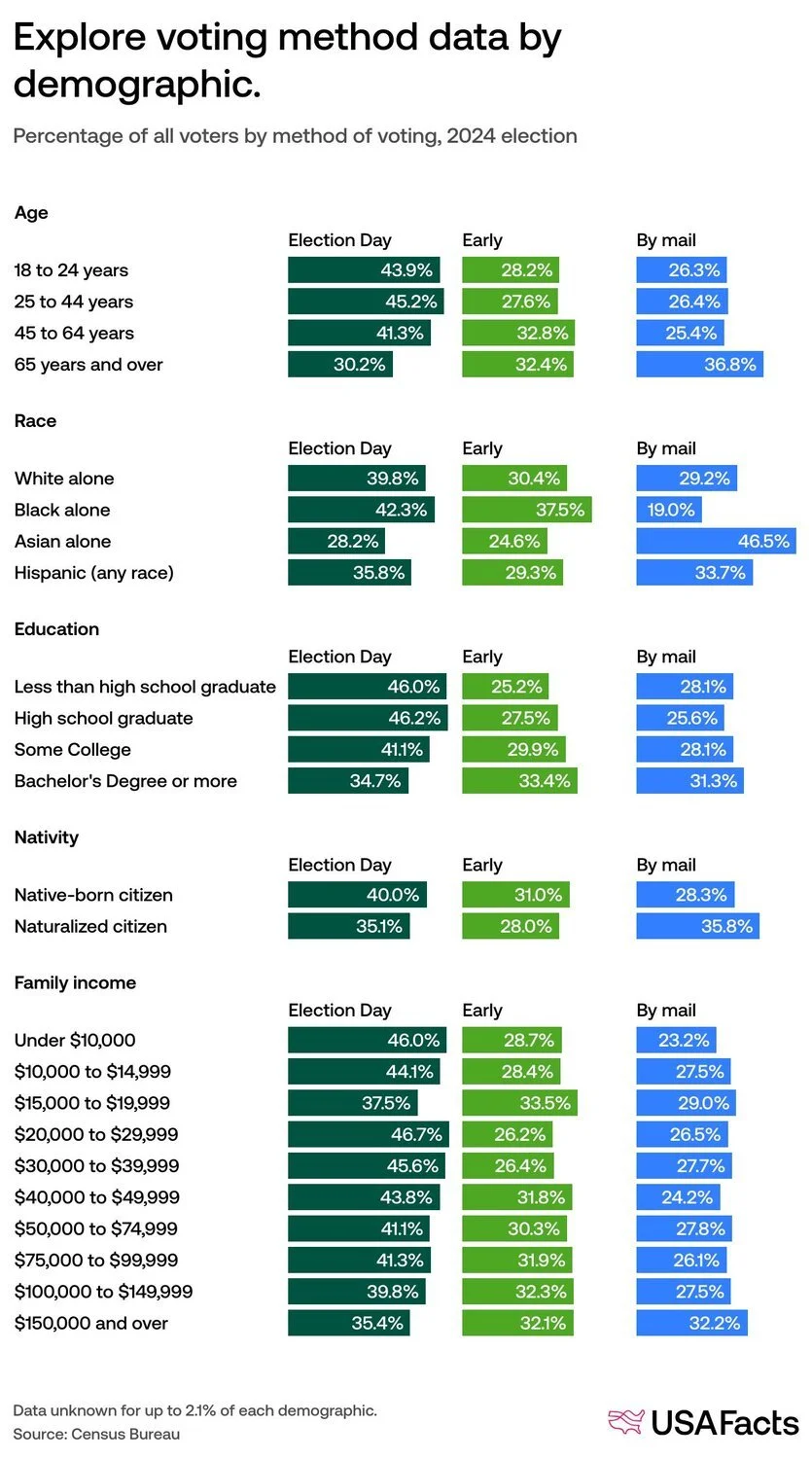
Based on the visual below, what type of person is most likely to vote by mail?
Increased early in person voting and mail/absentee voting has led pundits to conclude that we no longer have an election day, but instead have an election week. What is one consequence of this change?
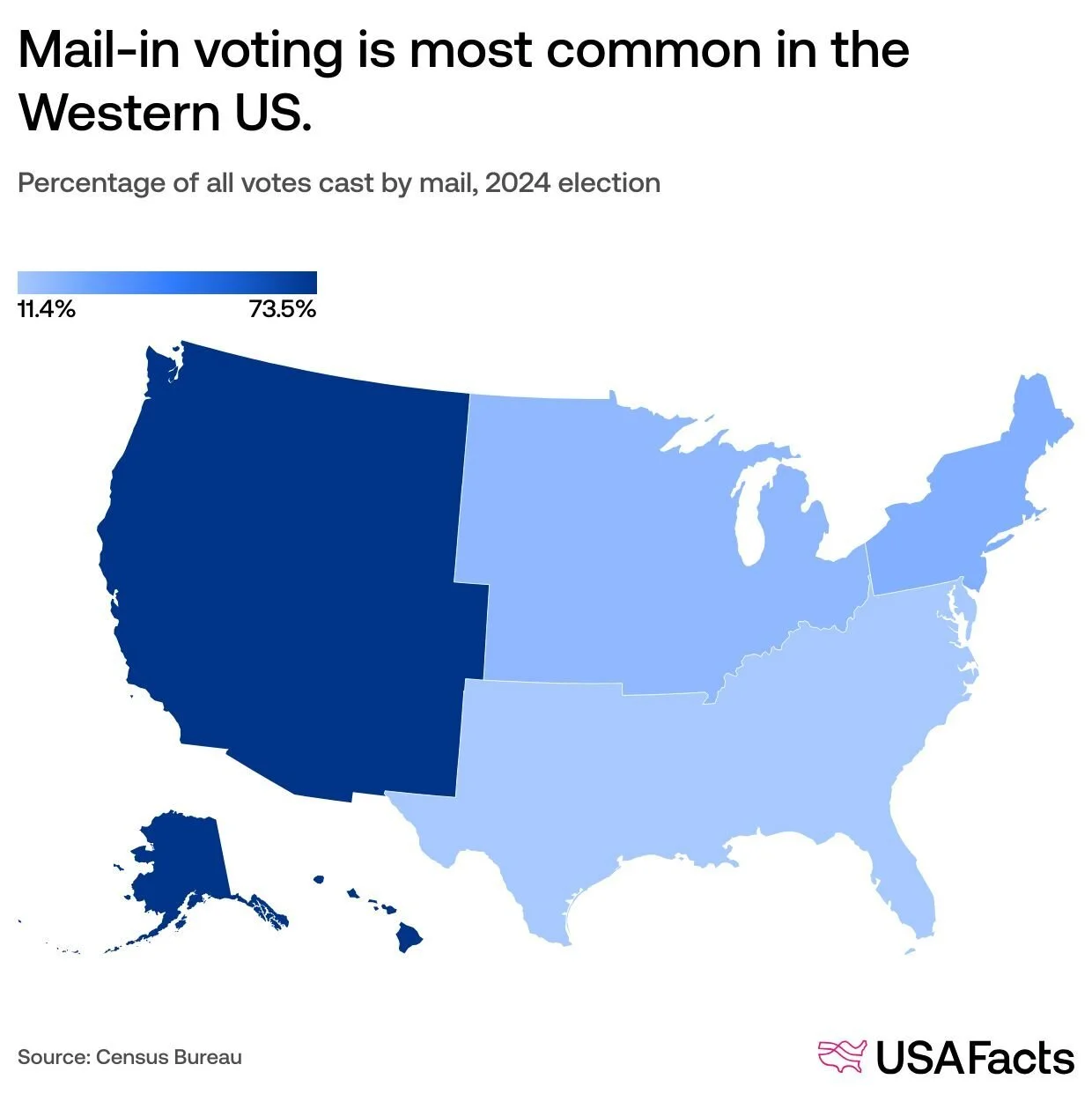
Eight states – California, Colorado, Hawaii, Nevada, Oregon, Utah, Vermont, and Washington – conduct what is commonly referred to as an all-mail election, or universal mail-in voting. In these states, voting is conducted primarily by mail, and all eligible voters receive a ballot by default. Why do you think these states do all mail voting?
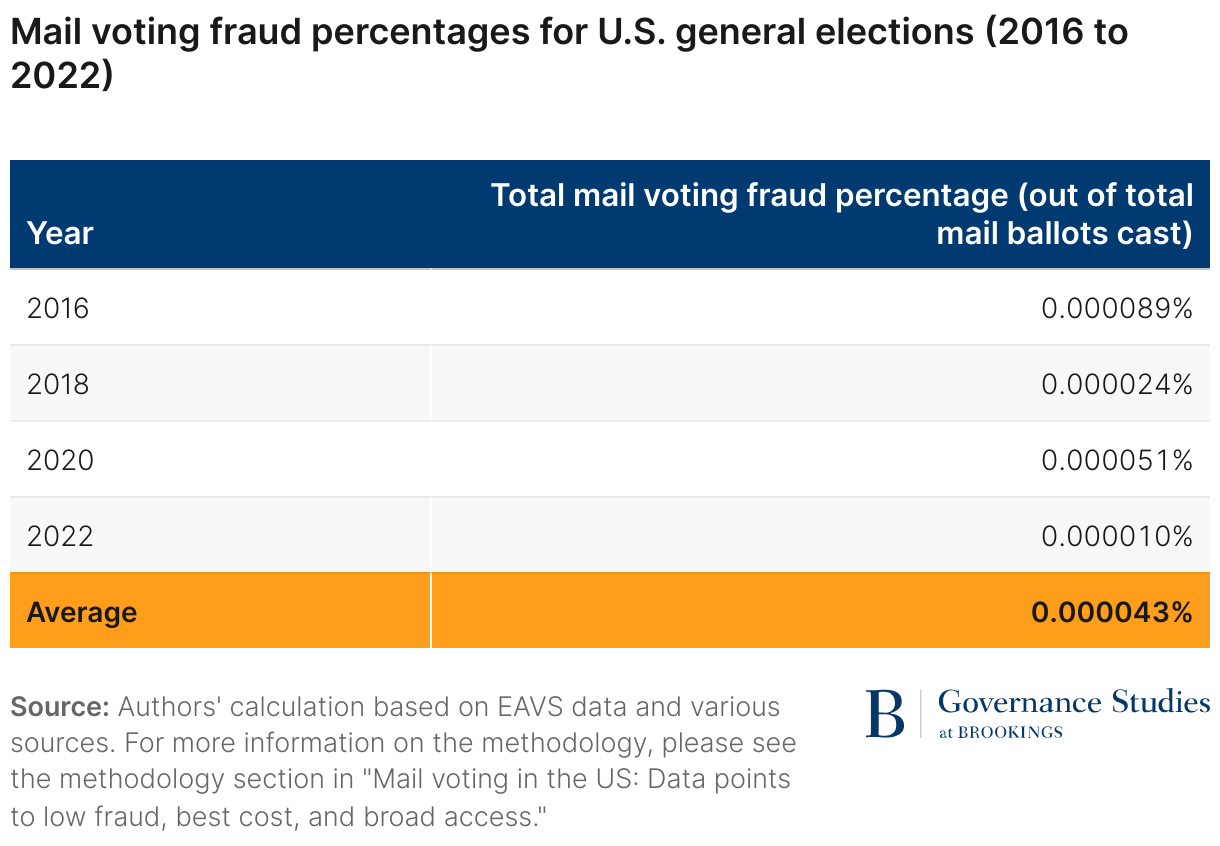
Based on the visual below* how common is voting fraud?
What does the map below* illustrate about federalism and elections?*
Several prior analyses have found that mail voting fraud is extremely rare, though exact percentages differ slightly based on the years or cases reviewed. A piece in the Hill in 2020 drawing from the Heritage Foundation’s database found that only about 0.00006% of total votes cast were fraudulent mail votes over the preceding 20 years. Other analyses have looked at a subset of states that have transitioned to universal vote-by-mail. The New York Times reported that states that have universal vote-by mail voting systems see “essentially zero fraud.” Specifically, they found that Oregon has seen only about a dozen documented cases of fraud since switching to a universal vote-by-mail voting system in 2000. A study conducted by the American Statistical Association found “no evidence that voting by mail increases the risk of voter fraud overall,” and estimated that Washington state would have likely seen around 80 more cases of fraud between 2011 and 2019 had it not transitioned to a universal vote-by-mail voting system. Why do you think the Trump Administration is working so hard to limit voting by mail?
Given that voter fraud is so rare, do you think the government should make voting easier or harder?
Write and Discuss
Take ten minutes to write about the question at the top of the page and then discuss with your classmates.
Act on your Learning
Learn about the voting guidelines in your state and how you can request an absentee ballot.
Get Creative
Create a new way to vote (vote by drone) and share your creation with class.
Learn More*
Read the MIT Voting Election Data Science Lab report on voting by mail.