How common is Birthright Citizenship?
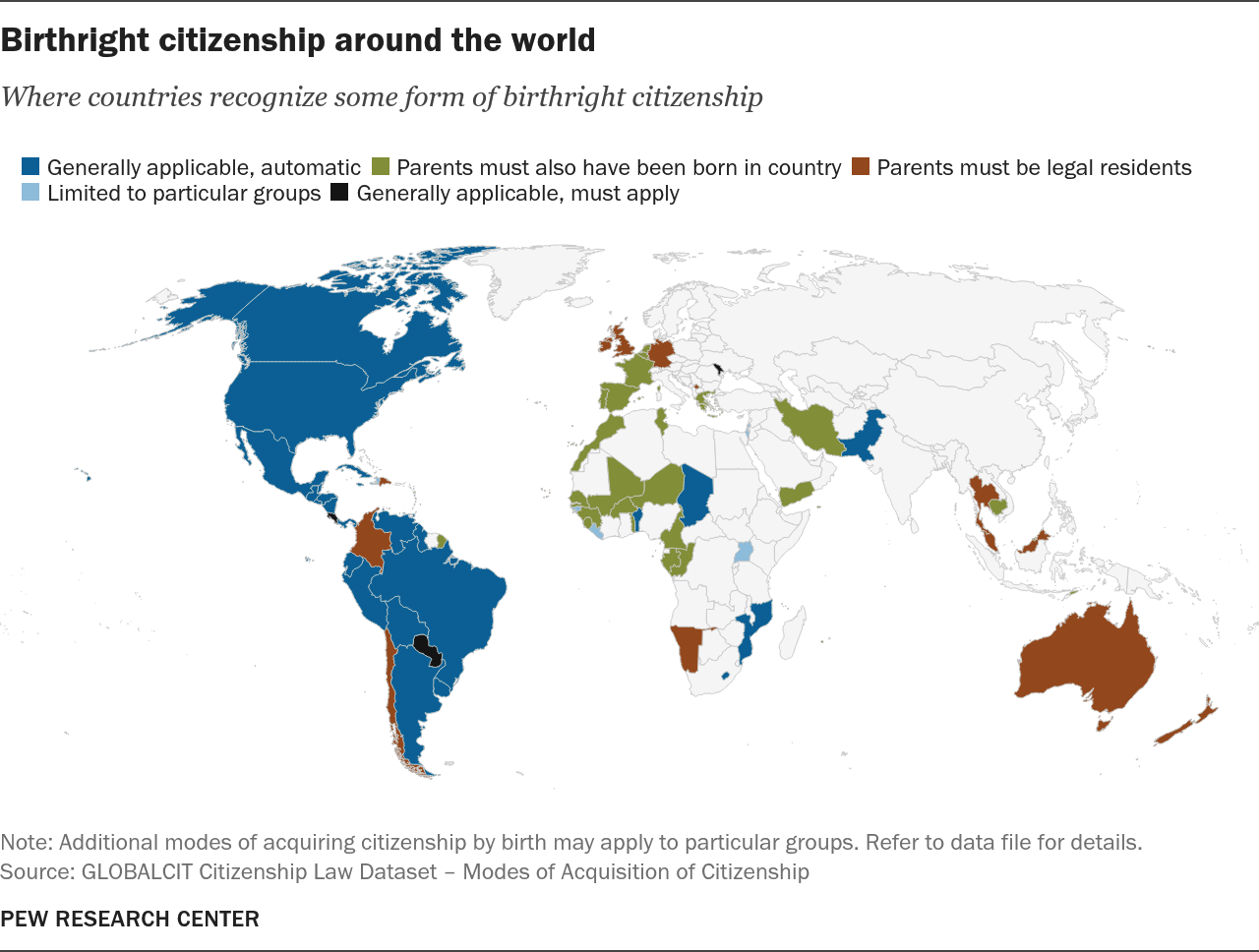
Critical Analysis
Find answers to the following questions using the visual above, any links below, your big brain, and your knowledge of American government and politics:
Approximately how many countries guarantee birthright citizenship (automatic citizenship to anyone born in that country)?
What is the big story this map tells?
What is one consequence of a country not offering birthright citizenship?
What criteria for citizenship should our nation have?
Are there any restrictions you would place on birthright citizenship?
On January 20, 2025, President Trump signed an executive order (EO 14160) aiming to end automatic birthright citizenship for children born in the U.S. to undocumented or temporary visa-holding parents. The order, intended to take effect on February 19, 2025, requires at least one parent to be a U.S. citizen or lawful permanent resident. However, federal courts blocked the order almost immediately as a violation of the Fourteenth (XIV) Amendment, and as of April 1, 2026, the Supreme Court is considering its constitutionality. Birthright citizenship has been the law of the land since 1868; Why do you think President Trump is trying to remove birthright citizenship?
The Fourteenth Amendment (1868) reads, “All persons born or naturalized in the United States, and subject to the jurisdiction thereof, are citizens of the United States and of the state wherein they reside.” Explain whether, in your opinion, the Fourteenth Amendment guarantees citizenship to anyone born in the United States?
In United States v. Wong Kim Ark (1898), the Supreme Court ruled 6–2, on the issue of birthright citizenship, that Wong, born in San Francisco to Chinese citizens, was an American citizen under the 14th Amendment. The ruling established that birthright citizenship applies to nearly all children born in the U.S., regardless of parents' nationality or status. The issue of birthright citizenship is before the Supreme Court again. Can you think of another case where the Supreme Court overturned a former ruling?
the Immigration and Nationality Act of 1952, says that anyone “born in the United States, and subject to the jurisdiction thereof,” is a citizen. If a president makes an executive order such as EO 14160, that contradicts a federal law, who decides the winner?
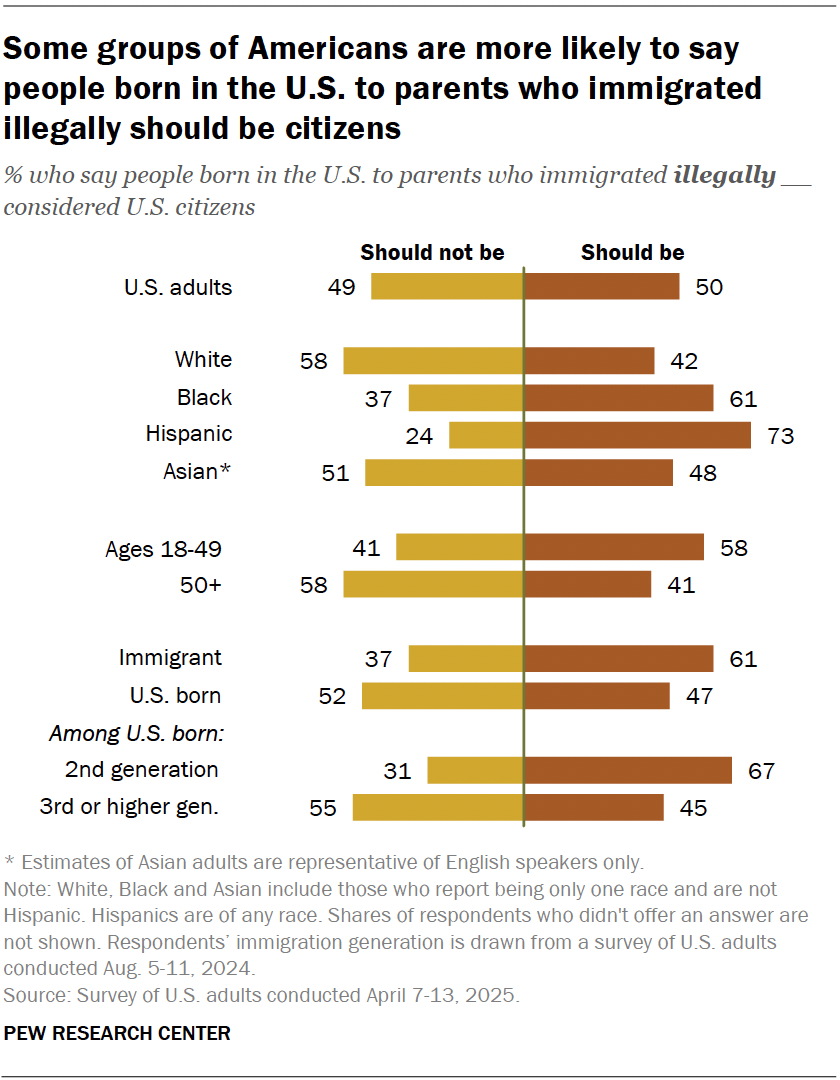
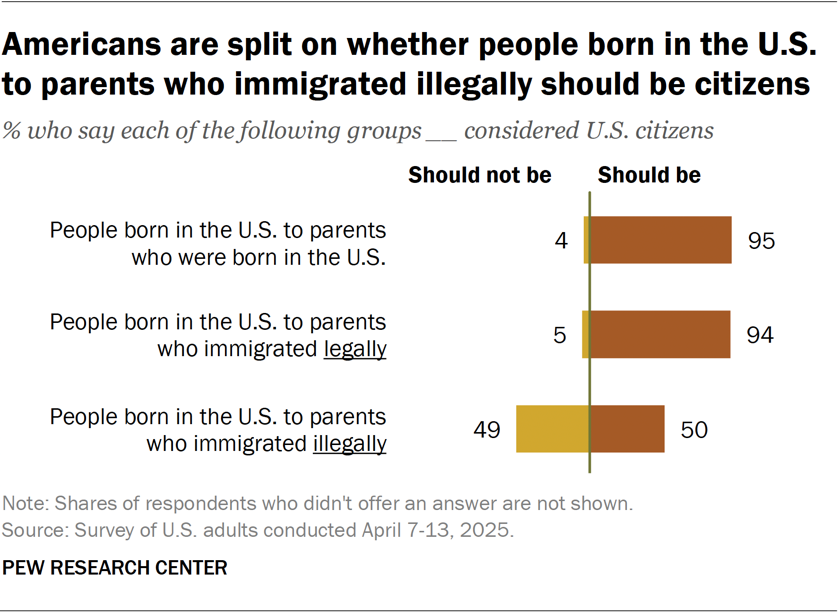
One legal way to get rid of birthright citizenship would be to amend the constitution to repeal the citizenship portion of the 14th Amendment. That would take considerable time and would need approval of 2/3 of Congress and 3/4 of the states. Given the fact that 50% of Americans approve of birthright citizenship for all, do you think the XIV Amendment would likely be repealed?
Write and Discuss
Take ten minutes to write about the question at the top of the page and then discuss with your classmates.
Act on your Learning
Take part in our Learning Lab: Birthright Citizenship Lab
Get Creative
Be thoughtful and creative and imagine what life would be like for children who were born in the U.S. but were not citizens of the U.S. (or of another country either). Write or sketch out your thoughts on what their life would be like.
Learn More

Get AP Exam Ready with anytime access to our growing collection of exam-prep resources, self-guided workshops, interactive reviews, games, and exclusive content.