Critical Analysis
Find answers to the following questions using the visual above, any links below, your big brain, and your knowledge of American government and politics:
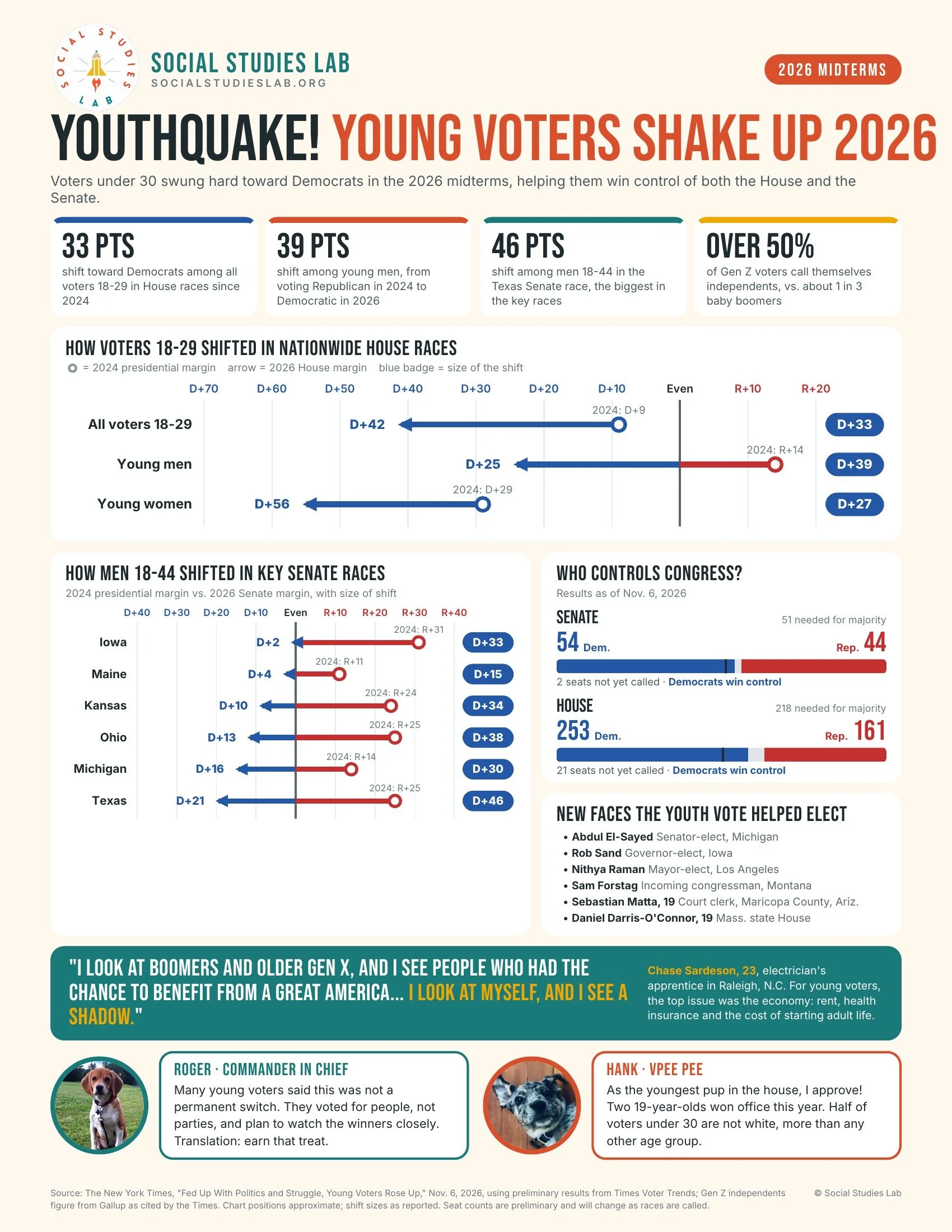
Which group shifted the most in House races: all young voters, young men or young women? Which group actually switched parties instead of just becoming more Democratic? Use numbers from the chart.
Among men 18–44, every Senate race shown moved by at least 15 points. Which state had the biggest shift and which the smallest? Give one reason the shift might be smaller in some states.
Think about friends, siblings or classmates who are 18 or older. Did you see this shift in the people you know? What did they talk about, care about, or complain about this fall? Do your peers match the national data or not? Explain.
Analysis of reasons for the shift in the youth vote points to the economy, rent, health insurance, war, and frustration with older politicians. Rank the top three reasons young people changed how they voted, and explain your top choice with evidence from the infographic.
With Democrats controlling both chambers, predict one policy change this youth shift could produce, such as housing costs, health insurance, student debt or foreign policy. Who would support it, who would resist, and could it survive a presidential veto?
Many young voters said they voted “for the people, not the party,” and more than half of Gen Z voters identify as independents. What does that mean for party identification and party loyalty? Is the youth vote a realignment, or a one-time protest that could swing back?
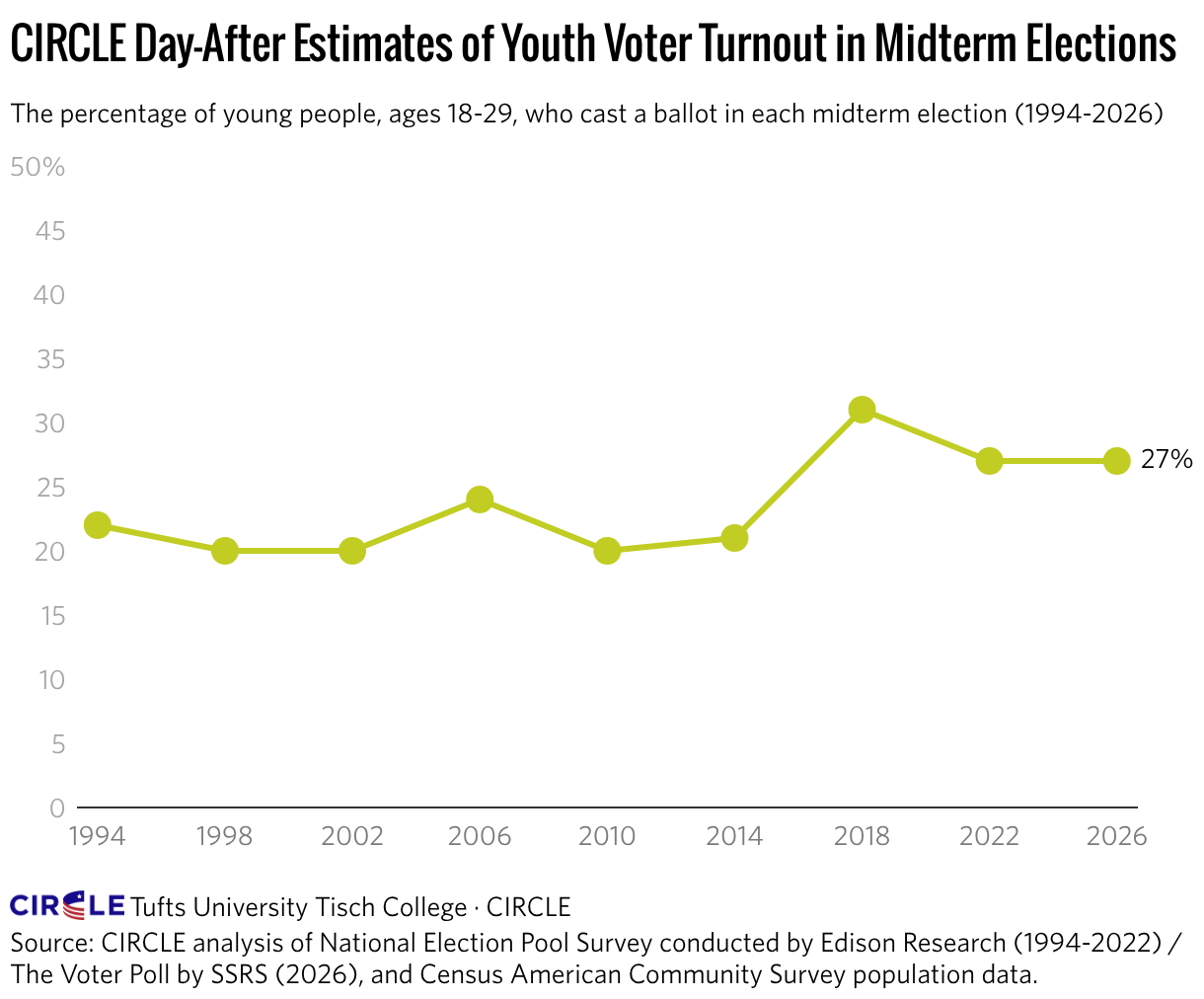
Congress’s median age is about 59. Young voters said older politicians felt “out of touch.” How might electing younger candidates change descriptive representation in Congress? Use data from both infographics.
In most midterms, the president’s party loses seats. How does this election fit that pattern? What role did young voters play in turning a typical midterm loss into a wave?
With Democrats in control of Congress and a Republican president, what tools can each side use: the veto, the power of the purse, oversight hearings, Senate confirmations? Predict one major clash for 2027.
Today’s youth voter is tomorrow’s older voter. Even years later, most people stick with the same party they first voted for. Historically, young people vote at lower rates than older Americans. If young turnout stays high, how might candidates and parties change their messages and promises?
Write and Discuss
Take ten minutes to write about the question at the top of the page and then discuss with your classmates.
Act on your Learning
Register to vote. If you are already registered, or if you won’t be 18 by November 7, 2028, find someone else to register to vote.
Get Creative
Campaign for the Congressional Class of 2030.
Imagine running for Congress in 2030, (you must be 25 to run for the House, 30 for Senate). Creates a campaign kit:
a slogan
a 30-second video script or TikTok-style ad
a three-point platform aimed at young voters