How popular is the Iran War?
Public Support for
U.S. Military Intervention
Percentage of Americans who supported U.S. military involvement in the first days of each conflict, from World War II through 2026.
Note: There is no polling on public approval of the Vietnam War at the start of the conflict. Each dot represents first-days-of-conflict polling.

Critical Analysis
Find answers to the following questions using the visual above, any links below, your big brain, and your knowledge of American government and politics:
According to the visual above, in the first days of the conflict, approximately what portion of Americans supported U.S. military involvement in World War II?
According to the visual above, in the first days of the conflict, approximately what portion of Americans supported U.S. military involvement in the Iran War?
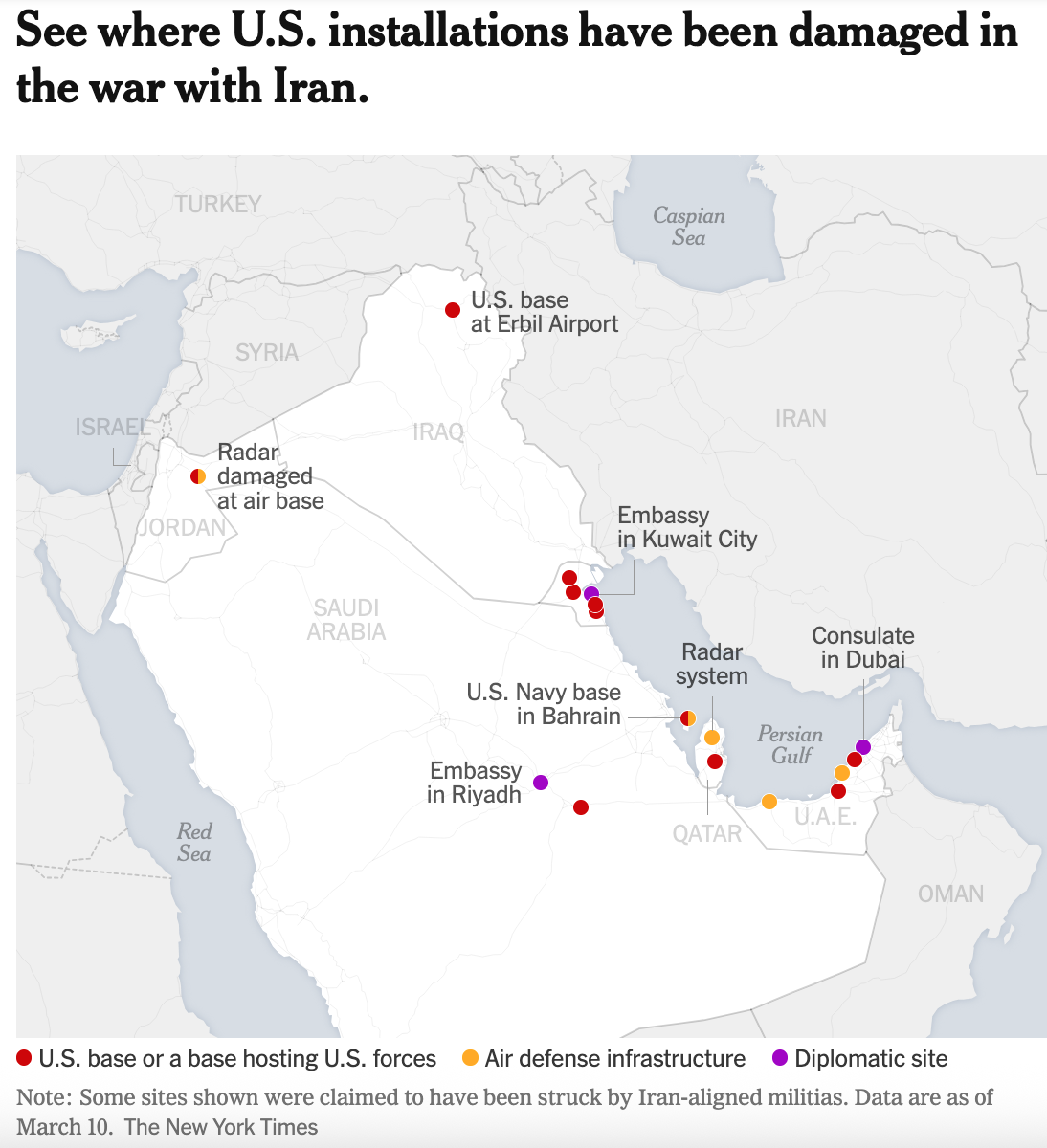
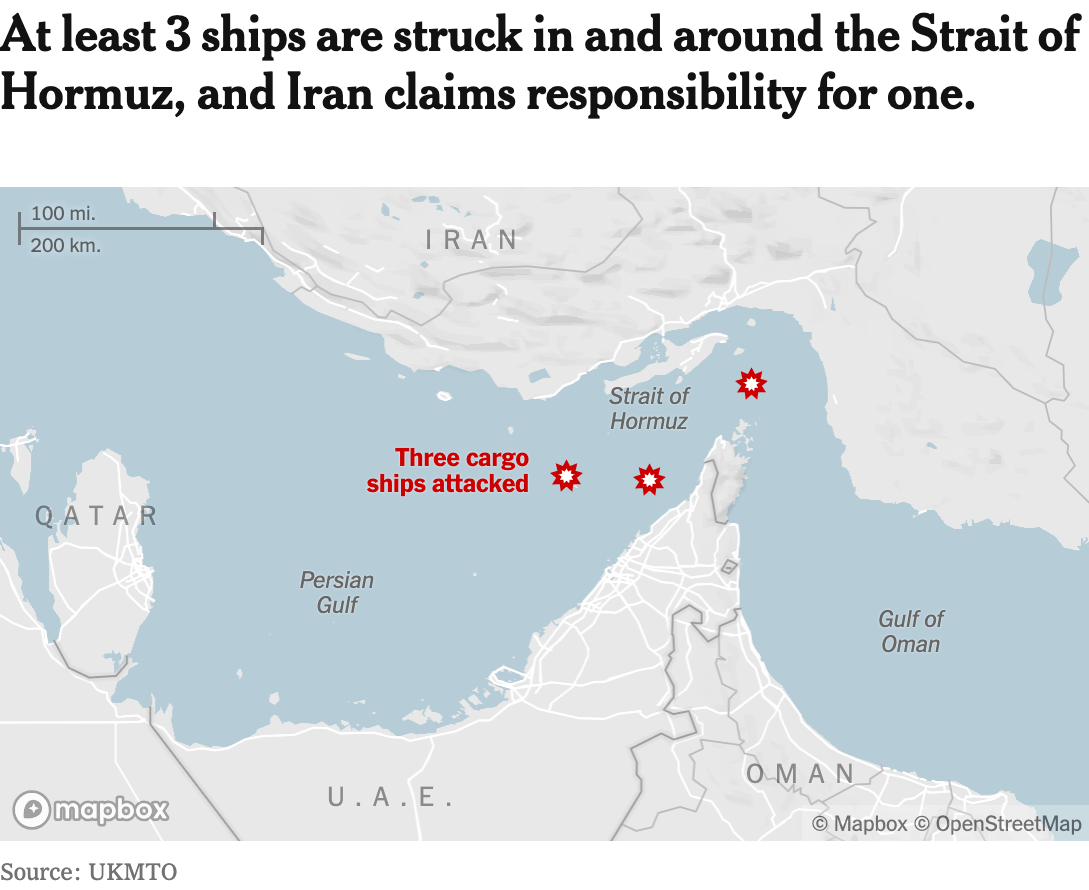
Reasons for the war in Iran have shifted over the past few days. In his first live public remarks on the operation, he offered four reasons for the campaign: Destroying Iran's missile capabilities; Annihilating Iran's navy; Preventing Iran from developing nuclear weapons; Ensuring the regime can't continue to arm, fund or direct "terrorist armies" outside its borders. Since then the Trump administration has justified military actions against Iran by citing the need to eliminate "imminent threats" to U.S. personnel and allies, stop the development of nuclear weapons, and dismantle their ballistic missile program. Additional reasons include halting regional destabilization by terrorist proxies and responding to Iranian threats against U.S. interests. What do you think is the goal of the Iran War?
Military analysts estimate that the current conflict in Iran, known as Operation Epic Fury, is costing the United States between $800 million and $1 billion per day. The first 100 hours of the operation alone, which began in late February 2026, were estimated to cost approximately $3.7 billion. How much do you estimate the total bill of the war will be?
One reason for the difference in support of earlier wars with the war in Iran, said Sarah Maxey, an associate professor of international relations at Loyola University of Chicago, is the way previous presidents have taken the time to sell wars to the public. “Before the Iraq War in 2003, we had a whole year of why this mattered, why we exhausted other operations, why we needed this,” said Ms. Maxey, who studies public opinion around war and foreign conflicts. “We have not had many foreign conflicts without a clear communication strategy beforehand.” What do you think the lack of a clear communications strategy will do to the outcome of the war?
At the beginning of wars, presidents typically experience what researchers call the “rally around the flag effect,” where support swells, even among those who otherwise disapprove of the president. As political polarization has grown over the last 30 years and Americans have drifted further apart politically, that effect has diminished. “People from the opposing party of the president have been the source of most of the rally, but Democrats are not going to rally behind Trump,” said Matthew Baum, a professor at Harvard University who studies public opinion on foreign policy. “For this president, to the extent that he has any rally from his base, he has a base who thinks they hired him to get him out of wars,” he added. Explain whether there will be a rally around the flag effect for the Iran War?
Support for wars typically wanes over time, as casualties increase and Americans start to feel the costs of war. Near the start of the Vietnam War, a 60 percent majority of Americans did not see the war as a mistake. But as the number of casualties grew, so did the public’s doubts. By 1969, a majority of the public said the war was a mistake. That number continued to grow as the war went on. (There is no polling on public approval of the Vietnam War at the start of the conflict.) Popular sentiment about the Iraq War plummeted soon after it began, with just 43 percent of Americans supportive of the war by the end. That drop in support, though, occurred across both parties. What do you think will happen to support for the Iran War?
The War Powers Resolution of 1973 requires the President to notify Congress within 48 hours of committing troops and limits unauthorized military engagement to 60 days. How might the low public support for the Iran War (41%) affect Congress's willingness to authorize the conflict under this framework?
Interest groups, media, and political elites are all considered agents of political socialization. Using the chart as evidence, construct an argument for how any ONE of these agents might influence public support for military intervention.
A civil libertarian might argue that high public support for military action (such as the 97% for WWII) creates conditions where individual rights are most at risk. Using your knowledge of cases like Schenck v. United States, evaluate this claim.
Write and Discuss
Take ten minutes to write about the question at the top of the page and then discuss with your classmates.
Act on your Learning
Contact your U.S. Representatives and Senators and let them know what you think about the Iran War.
Get Creative
Create a poster either supporting or opposing the Iran War and post it in a hallway at your school.
Learn More
This lesson is here today but it will be gone tomorrow…unless you subscribe to our AP Government Archive.
Teaching AP Government is a marathon, and every class period needs a strong start. The Liberty Bell Ringer Membership gives you an archive of 1,000+ ready-to-go bell ringers. But it doesn't stop there. When it's time to mix things up, dig into a growing library of whole-class games your students will actually enjoy. And when May draws near the built-in exam prep has you covered. Cancel at any time. Use promo code SIGNMEUP at checkout to get the first month of our monthly subscription for free!